Shopping in the souks of Marrakech is an essential experience during any journey to the Red City. True labyrinths of bustling alleyways, the souks are filled with handcrafted treasures, vibrant colors, intoxicating aromas, and ancestral savoir-faire. From Berber rugs and pierced brass lanterns to handmade leather bags, fragrant spices, and glazed Moroccan ceramics, every stall reveals a distinct facet of Moroccan craftsmanship.
Yet shopping in the Marrakech souks is about much more than picking up decorative souvenirs. It is also an art of mindful observation, engaging in warm conversation with makers, and learning to negotiate prices in a friendly, respectful spirit. Whether you are searching for a statement home piece, a thoughtful gift, or an authentic work of craft, here is our complete insider guide to successful shopping in the Marrakech souks.
Discovering the Souks of Marrakech: A Journey into Moroccan Craftsmanship
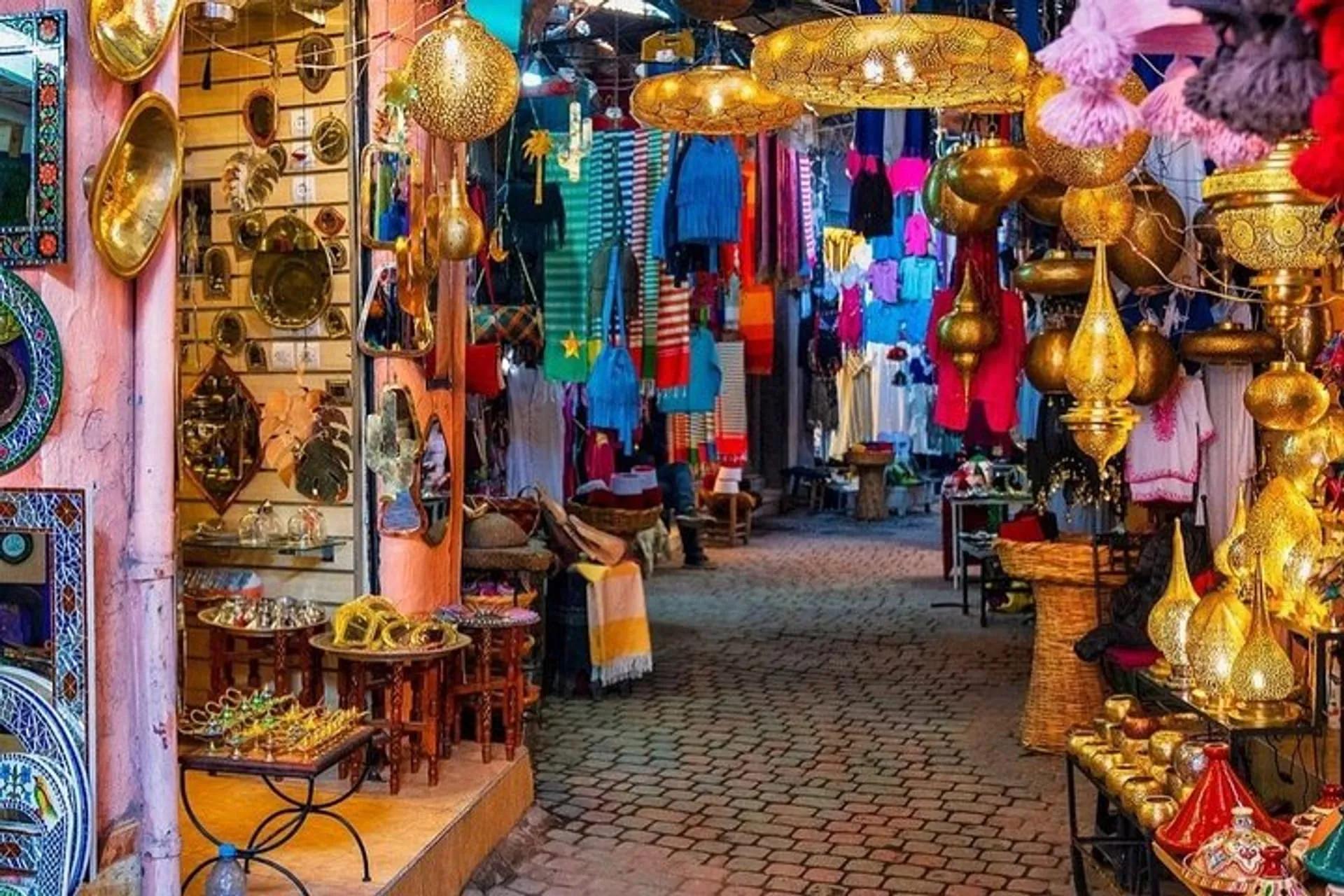
Situated primarily in the historic center of the Medina, the souks of Marrakech represent one of the city’s most iconic landmarks. Historically organized by specific artisanal trades, they form a dense network of shaded thoroughfares where shopkeepers, master craftsmen, workshops, and small stalls stand shoulder to shoulder.
Every quarter maintains its own identity and dedicated guild. As you meander through these lively corridors, you will observe artisans preserving heritage techniques passed down through generations: leather-working, loom weaving, metal chasing, pottery, woodwork, and iron forging.
Exploring the souks also grants an intimate glimpse into the daily life of local residents and the cultural depth of Morocco.
Where Are the Main Souks in Marrakech Located?
The vast majority of the souks extend north of the famous Jemaa el-Fna square, sheltered under slatted timber and reed awnings. Starting your walk from the square makes navigation straightforward as you venture progressively deeper into the specialized artisan quarters:
- Souk Semmarine: The central, widest artery of the souks, packed with traditional clothing, leatherwork, textiles, antiques, and gifts.
- Souk des Teinturiers (Sebbaghine): The iconic dyers’ quarter, renowned for skeins of freshly dyed wool and silk drying on overhead racks.
- Souk Haddadine: The ironworkers’ and blacksmiths’ street, echoing with the rhythmic clang of hammers shaping lanterns, grilles, and tables.
- Souk Cherratine: Historically dedicated to saddle-makers and leather craftsmen, now filled with handmade babouches, weekender bags, and belts.
- Souk des Tapis (Criée Berbère): The premier historic auction square and surrounding alleys dedicated to tribal and city-woven rugs.
The best way to experience the souks remains slowing down, allowing yourself to turn into quiet side alleys, and stepping inside authentic artisan workshops.
What to Buy in the Marrakech Souks: Must-Have Keepsakes
The souks showcase a magnificent range of handmade pieces. Several items stand out for their authenticity, aesthetic elegance, and connection to Moroccan heritage.
Berber Rugs: An Ancestral Art Form
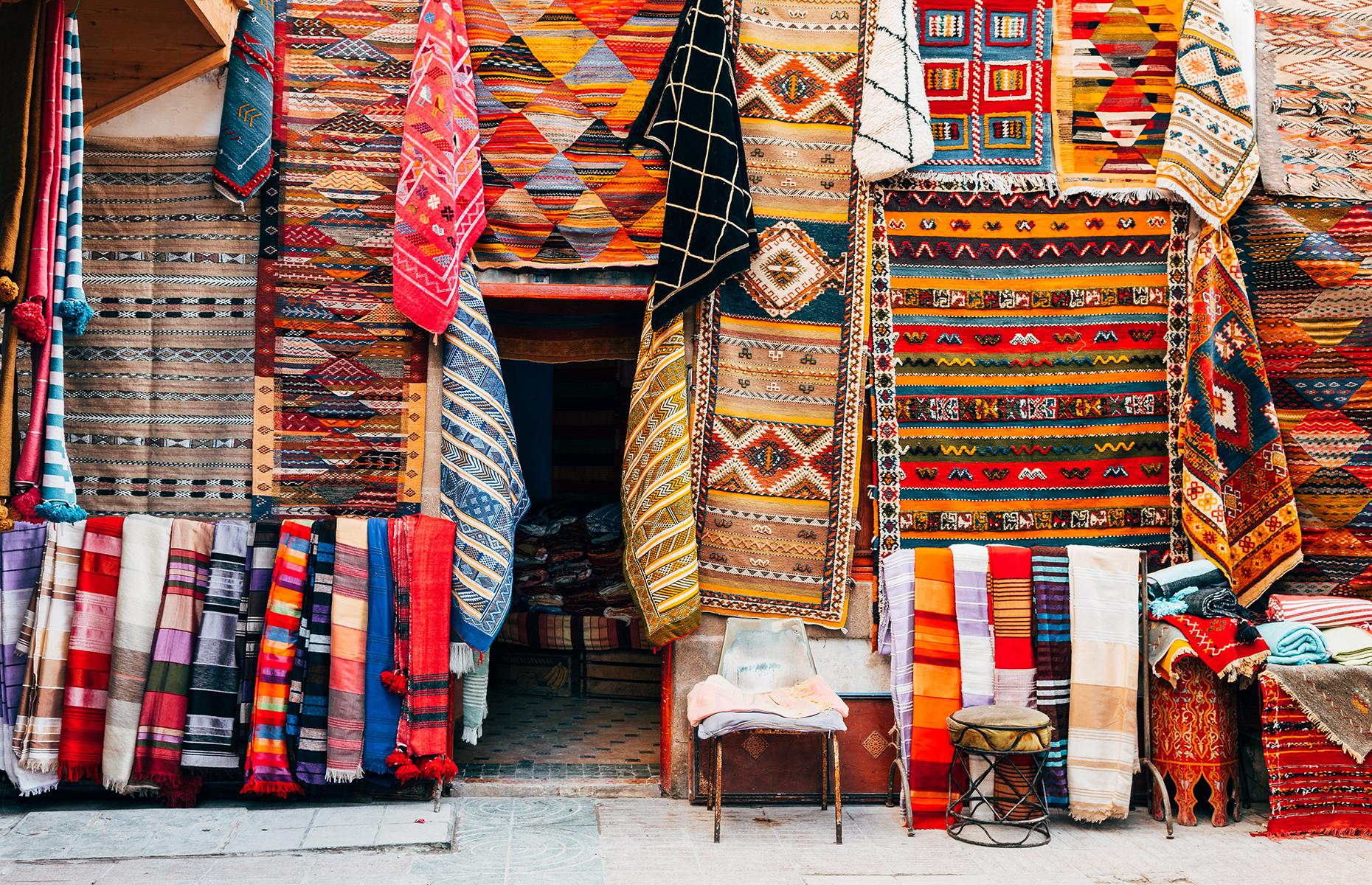
Moroccan rugs are among the most sought-after interior design treasures in Marrakech. Knotted entirely by hand on traditional wooden looms, each piece tells a personal story through geometric symbols, natural wool tones, and tribal motifs. To learn more about their history and construction, explore our in-depth feature on the handcrafted Moroccan rug.
Key styles to look for include:
- Beni Ouarain: Plush, thick unbleached ivory sheep’s wool adorned with minimalist black or charcoal-brown diamond patterns.
- Azilal: Highly artistic, expressive creations combining a natural wool base with colorful tribal motifs made from vegetable-dyed wool or cotton threads.
- Boujad: Warm, painterly rugs woven with tighter knots in rich terracotta, blush pink, faded ochre, and deep crimson tones.
- Kilim (Hanbel): Flat-woven, pileless rugs that are lightweight, durable, and graphic—ideal for warmer seasons or wall hangings.
Before buying, inspect the backside to verify knot density, check fiber authenticity (pure wool smells like natural fiber, not burnt plastic when tested), and arrange international shipping directly if luggage space is tight.
Pierced Moroccan Lanterns and Brass Lighting
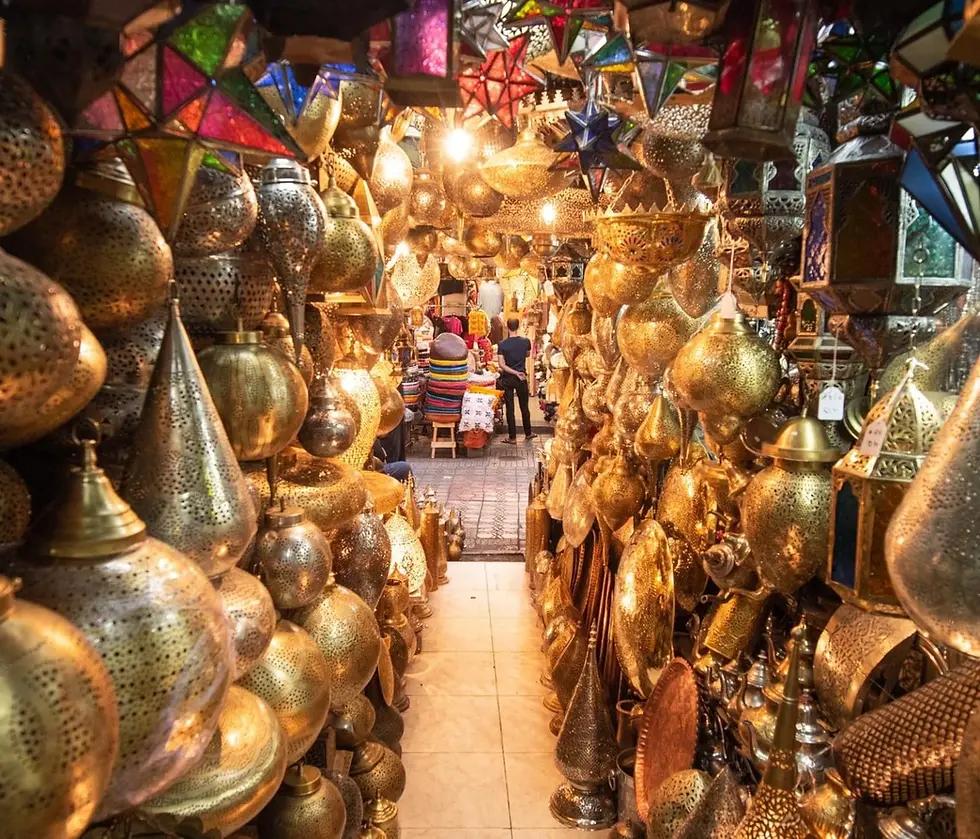
Lighting forged from copper, brass, or hammered sheet metal is one of Marrakech’s signature craft traditions. Chiseled, pierced, and sawn by hand, these lamps project mesmerizing lace-like patterns of shadow and light across walls and ceilings.
Available in every scale—from bedside candle lanterns to majestic entryway pendants—be sure to verify the stability of the solder joints and confirm socket compatibility with your home country’s electrical standards.
Artisanal Leather Goods: Babouches, Weekend Bags, and Poufs
Leather craftsmanship is a historic bedrock of the city, sustained for centuries by the Medina’s ancestral tanneries. Local shops display genuine goat, cow, and camel leather items built for endurance:
- Traditional Babouches: Pointed urban slippers (Fassi style) or round-toed, thick-soled Berber walking slippers.
- Travel Bags and Satchels: Supple, vegetable-tanned hides patinated naturally without harsh synthetic chemicals.
- Leather Poufs: Sturdy leather floor cushions embroidered by hand with geometric arabesques, usually sold unstuffed for light travel packing.
Quality artisanal leather carries a mild, natural earthy scent that quickly airs out, rather than an aggressive, unpleasant chemical odor.
Handmade Ceramics and Traditional Pottery
From Safi and Fez to Marrakech workshops, Moroccan pottery charms collectors with its mineral glazes and traditional forms: oversized tagine serving dishes, soup bowls (zlafa), condiment dishes, and hand-cut zellige tiles.
Always distinguish functional flame-resistant clay tagines (thick, unglazed, or lightly lead-free glazed earthenware designed for stove burners) from purely decorative hand-painted serving tagines. Request generous bubble wrap for safe air travel.
Market Spices and Natural Wellness Products
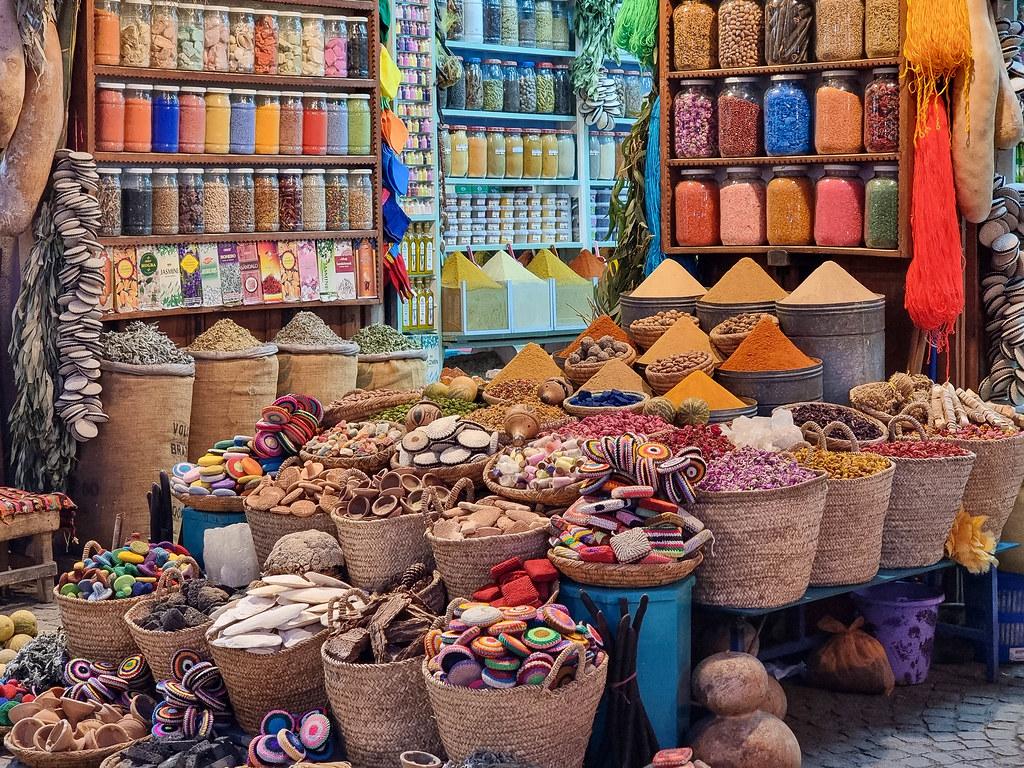
The spice markets offer an unforgettable visual and aromatic spectacle. It is the best place to stock up on fresh ingredients to recreate the warmth of Moroccan cuisine back home:
- Ras el Hanout: A signature aromatic blend of 20 to 30 freshly ground whole spices tailored for slow-cooked tagines and braises.
- Atlas Cumin: Unmatched depth of aroma and citrusy warmth without bitter undertones.
- Pure Saffron Threads: Sourced from Taliouine; buy whole crimson filaments rather than adulterated powders.
- Natural Self-Care: Cold-pressed cosmetic argan oil, eucalyptus black soap (savon noir), orange blossom hydrosol, and clarifying ghassoul clay.
Carved Thuya Wood and Hammered Metal Tableware
Craftsmen working with precious thuya wood—an indigenous conifer harvested near Essaouira—produce secret puzzle boxes, trays, bowls, and picture frames characterized by burled grain and an unmistakable herbal, cedar-like aroma. These sit alongside engraved silver-plated brass teapots and hand-hammered brass trays essential for authentic Moroccan tea service.
How to Haggle in the Souks of Marrakech: The Courteous Guide
In traditional Moroccan souks, haggling is neither a combative dispute nor an awkward chore: it is a celebrated social exchange founded on mutual respect, patience, and humor. Outside fixed-price state cooperatives and modern designer boutiques, asking prices are designed with room for discussion.
1. Take Time to Compare Prices First
Never conclude a deal at the very first stall along high-traffic routes like Souk Semmarine, where rents and starting quotes are naturally elevated. Wander into quieter side alleys where artisans produce their pieces on-site to gain an accurate sense of genuine market rates.
2. Approach the Conversation with a Warm Smile
Bargaining is a polite social dance. Greet shop owners with a respectful “Salam Alikoum” and take time for introductory pleasantries. If invited to share a glass of hot mint tea while inspecting carpets, accept graciously: it is an expression of hospitality and does not obligate you to buy if the item or final price does not suit you.
3. Make a Coherent and Respectful Counteroffer
The old tourist myth of blindly “countering with one-third of the initial price” is not an ironclad rule. On high-end handmade items requiring weeks of knotting or metalsmithing, a derisory lowball offer can feel disrespectful to the artisan’s labor. Formulate a mental maximum price you are genuinely happy to pay, then negotiate calmly toward that middle ground.
4. Avoid Showing Excessive Initial Attachment
If you loudly express open admiration for an object the second you see it, your room for negotiation narrows. Handle the item calmly, ask questions about its material and manufacturing technique, and inspect it thoroughly without seeming in a hurry.
5. Know When to Walk Away Politely
If negotiation reaches an impasse where the seller cannot drop further, thank the merchant warmly with a friendly “Choukran” and move along. Often, the vendor will call you back to accept your last offer; if not, you can find a comparable piece a few lanes away.
Common Shopping Mistakes to Avoid
- Rushing into Purchases: Take your time. You are always welcome to think things over and return the following day.
- Overlooking Quality Checks: Test zippers on leather bags, inspect the back of rugs for tight, uniform knots, and ensure ceramic bowls sit flat without rocking.
- Confusing Culinary and Cosmetic Argan Oil: Culinary argan oil is pressed from roasted kernels (yielding a golden-brown hue and nutty taste), while cosmetic argan oil is cold-pressed from raw kernels, pale yellow, and almost scentless.
- Paying in Foreign Currencies: Always settle transactions in Moroccan Dirhams (MAD) to guarantee fair pricing and avoid unfavorable exchange approximations.
Realistic Budget Guidelines for the Souks
Your shopping budget varies with the rarity of materials, age of vintage pieces, and level of craftsmanship. For orientation, typical realistic price brackets include:
- Small Crafts & Wellness Essentials (30 to 150 MAD): Black soap tubs, natural sponges, small jars of whole spices, embroidered pouches, and glass tea candle holders.
- Genuine Leather Babouches (100 to 250 MAD): Depending on leather softness, rubber sole quality, and hand-embroidered detailing.
- Hand-Pierced Brass Lanterns (200 to 1,500+ MAD): Scaled according to metal thickness, scale, and density of hand-chiseled cutouts.
- Glazed Ceramics & Cooking Tagines (50 to 300 MAD): Depending on circumference, clay density, and intricate hand-painted glaze work.
- Authentic Berber Rugs (1,200 to 10,000+ MAD): Closely governed by square meterage, knot density per row, wool grade, and vintage provenance.
Opening Hours and Crowds: The Best Time to Shop
Most stalls open around 9:30–10:00 AM and wind down toward 8:00 PM. On Fridays, many merchants shutter their workshops during early afternoon communal prayer before reopening late in the day.
Mornings (10:00 AM – 12:00 PM): The calmest hours to browse. Merchants have just opened their doors, and tradition holds that closing a fair first deal of the day brings good fortune (the opening blessing, or f’tah).
Late Afternoons (5:00 PM – 8:00 PM): The souks reach peak energy. Golden light filters through overhead reed roofs, creating an enchanting mood before spilling out toward Jemaa el-Fna at dusk.
Where to Stay to Explore the Souks with Ease
After hours of navigating winding alleys and carrying artisanal purchases, convenient hotel positioning makes all the difference. Choosing an address within walking distance that also offers serene courtyards provides the perfect sanctuary.
Opt for an authentic riad in the Medina or discover the quiet, character-filled rooms at Hotel Le Gallia, ideally located just a short walk from Jemaa el-Fna and the main entrances to the souks.
Frequently Asked Questions About Shopping in Marrakech
What are the absolute must-buys in the Marrakech souks?
Top authentic purchases include hand-knotted Berber rugs, genuine leather babouches, pierced brass lanterns, painted ceramics, authentic spices (such as saffron and ras el hanout), and pure cosmetic argan oil.
Is haggling mandatory in the Marrakech souks?
No, bargaining is not strictly mandatory, but it is deeply woven into Moroccan market culture. In traditional artisan stalls, initial quotes incorporate room for conversation and friendly price adjustments.
Can you pay by credit card in the Medina?
Major rug galleries, larger antique showrooms, and modern boutiques accept Visa and Mastercard. However, cash in Moroccan Dirhams (MAD) remains strictly essential for smaller stalls, spice vendors, and neighborhood artisans.
How do you ship large rugs or lanterns back home?
Established rug merchants and lighting ateliers work routinely with international freight and courier companies (such as DHL or FedEx). They package items securely in protective wrap and provide end-to-end tracking to your doorstep.
The Art of Souk Shopping: An Unforgettable Experience
Shopping in the souks of Marrakech reaches far beyond simple retail: it is a full sensory immersion into living Moroccan culture. By taking the time to appreciate the work behind handcrafted goods and negotiating with grace, you will return home with treasured keepsakes that carry lasting memories.
Take the time to wander without a rush: behind every hanging carpet and carved doorway lies the true soul of Moroccan artisan heritage.